

For homeowners along the beautiful Texas Gulf Coast, having a waterfront property often comes with the dream of a personal connection to the water. Whether it’s for fishing, boating, or simply enjoying the serene views, adding a structure to your shoreline can significantly enhance your property’s value and your lifestyle. But with options like piers, docks, and boathouses, how do you choose the right one for your unique needs and the challenging Texas coastal environment?
This guide will break down the characteristics, benefits, and considerations for each type of waterfront structure, helping you make an informed decision for your Texas home.
Understanding Waterfront Structures
While often used interchangeably, piers, docks, and boathouses serve distinct purposes and offer different advantages. Understanding these differences is the first step in planning your ideal waterfront addition.


Piers: Beyond a Simple Walkway
A pier is typically a long structure built out into a body of water from the shore, supported by pilings. Its primary purpose is to allow access to deeper water, often for fishing, enjoying scenic views, or as a landing point for boats that need deeper drafts. Piers are designed to extend over the water, rather than float on it, providing a stable, elevated platform.
Benefits of a Pier:
- Access to Deeper Water: Ideal for properties with shallow shorelines, allowing you to reach navigable depths for fishing or mooring.
- Minimal Shoreline Impact: Because they are built on pilings, piers often have less impact on the natural flow of water and marine life directly beneath them compared to solid structures.
- Scenic Views: Provides an excellent vantage point for enjoying sunrises, sunsets, and local wildlife.
- Versatility: Can be designed with benches, fishing stations, and lighting for various recreational activities.
Considerations for Piers:
- Length Requirements: The necessary length will depend on the water depth and tidal fluctuations, which can be significant on the Texas Gulf Coast.
- Exposure to Elements: Piers are fully exposed to wind, waves, and sun, requiring durable materials and regular maintenance.
Docks: Your Gateway to the Water
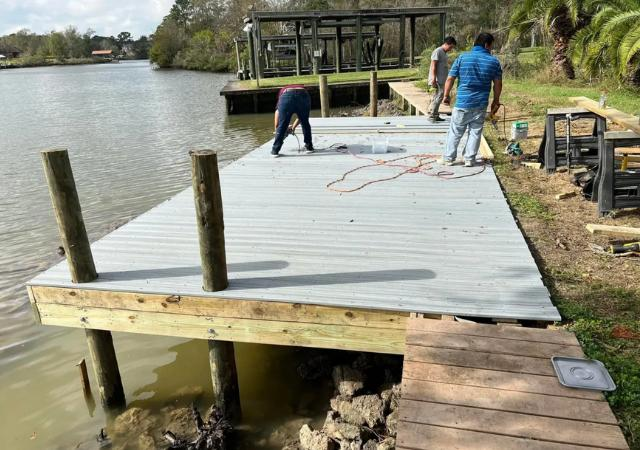
A dock is typically a platform built at the water’s edge or extending a short distance from the shore, primarily used for mooring boats, jet skis, and providing direct access to the water for swimming or launching kayaks. Docks can be fixed (supported by pilings) or floating (supported by buoyant pontoons).
Types and Benefits of Docks:
- Fixed Docks: Offer stability and a permanent structure, ideal for areas with minimal water level fluctuation. They are robust and can support heavier loads.
- Floating Docks: Adapt to changing water levels, making them perfect for tidal areas like the Texas coast. They provide consistent access to your vessel regardless of the tide.
- Direct Boat Access: Designed for easy boarding, loading, and unloading of watercraft.
- Amenities: Can easily accommodate boat lifts, cleats, power, and water hookups.
Considerations for Docks:
- Water Level Fluctuation: Critical for determining if a fixed or floating dock is more suitable.
- Maintenance: Regular cleaning and inspection are necessary, especially for wooden docks exposed to salt water and marine organisms.
- Specific Boat Needs: The type and size of your boat will heavily influence the dock’s design and features.

Boathouses: Ultimate Protection and Convenience
A boathouse is an enclosed structure built over water, specifically designed to store and protect boats from the elements. Often equipped with boat lifts, boathouses offer superior protection from sun, rain, and storms, significantly extending the lifespan of your vessel. They can range from simple shelters to elaborate multi-story structures with living quarters or storage.
Benefits of a Boathouse:
- Superior Protection: Shields your boat from UV damage, rain, hail, and strong winds, reducing wear and tear and maintenance costs.
- Enhanced Security: Provides a secure, locked environment, deterring theft and vandalism.
- Convenience: Your boat is always ready to go, without the need for trailering or extensive preparation.
- Increased Property Value: A well-built boathouse can be a significant asset, adding considerable value to your waterfront property.
Considerations for Boathouses:
- Higher Initial Cost: Generally the most expensive option due to their complexity and size.
- Larger Footprint: Requires more space and can have a greater visual impact on the shoreline.
- Permitting & Regulations: Often involve more stringent permitting processes due to their size and enclosed nature.
Key Factors for Your Texas Property
Choosing the right structure is more than just personal preference; it’s about understanding the unique challenges and opportunities of the Texas Gulf Coast.
- The Coastal Environment: Texas coastal properties are subject to hurricanes, tropical storms, significant tidal shifts, and constant erosion. The foundation of any structure, whether it’s a pier, dock, or boathouse, must be engineered to withstand these harsh conditions. Our expertise in marine and land pile driving ensures that your waterfront structure has a strong, reliable foundation, capable of standing up to the Texas elements.
- Permitting and Regulations: Building on the Texas coast involves navigating a complex web of local, state, and federal regulations. Agencies like the Texas General Land Office (GLO) and the U.S. Army Corps of Engineers have strict guidelines for waterfront construction. Familiarity with these rules is paramount. For detailed information on Texas coastal development, you can refer to resources from the Texas General Land Office.
- Budget and Long-Term Investment: While a boathouse has a higher upfront cost, its protective qualities can save you money on boat maintenance and extend your vessel’s life. Piers and docks offer different cost points but also require regular maintenance and potential piling repair over time. Consider the total cost of ownership, including permits, construction, and ongoing upkeep.
- Your Lifestyle and Needs: How do you envision using your waterfront? If it’s primarily for fishing and enjoying the view, a pier might suffice. If you’re an avid boater, a dock with a boat lift, or the ultimate protection of a boathouse, would be more appropriate. Think about future plans, too – will your boating needs change?

Making the Right Choice: A Comparative Overview
| Feature | Pier | Dock | Boathouse |
| Primary Use | Fishing, sightseeing, access to deeper water | Boat mooring, recreation, swimming | Boat protection, storage, enhanced security |
| Protection | Minimal (from above) | Minimal (from above/sides, unless covered) | Superior (full enclosure) |
| Cost | Moderate | Moderate to High | High |
| Footprint | Narrow, extends outward | Variable, often parallel/perpendicular | Large, enclosed over water |
| Tidal Adapt. | Fixed (pilings) | Fixed or Floating (adjusts with water) | Fixed (pilings) |
Choosing the right waterfront structure for your Texas property is a significant decision that blends your lifestyle aspirations with environmental realities and regulatory requirements. Each option – pier, dock, or boathouse – offers unique benefits and considerations. The key is to assess your primary needs, evaluate the specific conditions of your shoreline, and understand the long-term investment involved.
Ready to discuss your waterfront vision? Don’t navigate these decisions alone. Contact Texas Marine Pile Drivers today for a personalized consultation and a free estimate. You can reach us directly at (832) 261-4777 or fill out our convenient online contact form. Our team of experienced professionals specializes in designing, permitting, and constructing high-quality waterfront structures that are built to last in the demanding Texas coastal environment. Let us help you turn your waterfront dreams into a reality.